
Jaguar’s November 2024 rebrand ran an ad with no cars in it, and the internet noticed. Sales then fell hard. But Jaguar’s parent was also winding down the old models on purpose before its electric lineup arrived. So the ad alone can’t take all the blame for the collapse.
What Jaguar Was Trying to Become
The British luxury nameplate was already planning a move away from its established lineup toward a substantially more expensive all-electric identity. Jaguar presented the rebrand as part of that transformation, not simply a new advertising slogan for the existing vehicles.
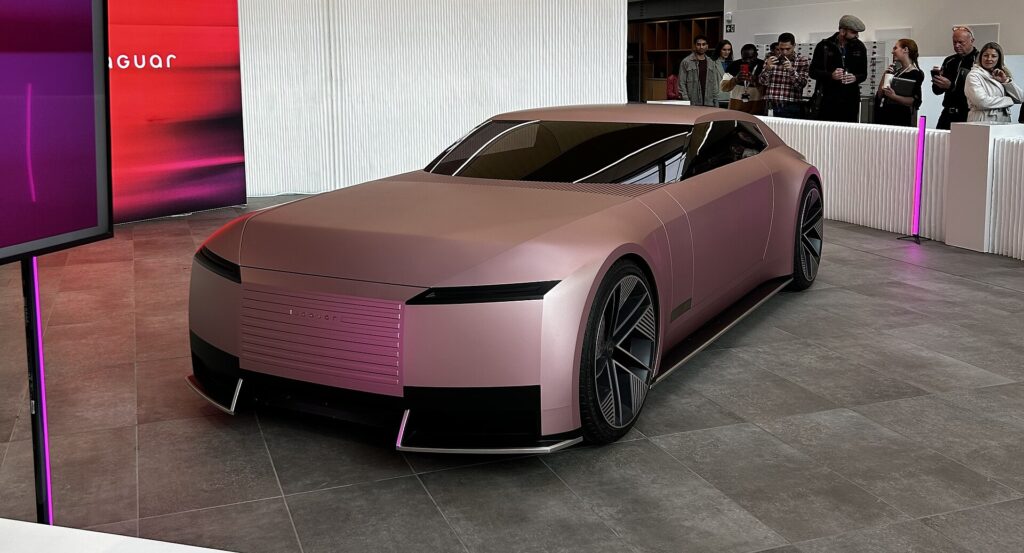
Its visual campaign used unconventional fashion imagery and language about originality. A concept car named Type 00 followed in December 2024. Critics asked why the initial marketing failed to display the company’s actual vehicles and argued that the presentation risked losing loyal drivers.
Defenders viewed it as an effort to gain attention in a crowded premium market and create a distinct design identity before new models reached customers. They also pointed out that a transformation aimed at future buyers need not resemble advertising for the outgoing range.
The company continued using its originality theme on official Jaguar pages and later promoted the Type 01. The latter was unveiled in New York on October 6, 2026, according to Jaguar’s media newsroom.
This timeline is important: the late-2024 campaign preceded a period with limited fresh Jaguar inventory by design. Sales during that gap are not a clean referendum on demand for the new car.
The Brand’s Sales by the Numbers
Jaguar Land Rover’s fiscal 2025 annual reporting showed Jaguar retail sales of 48,445 vehicles, a decline of 27.5% from the previous fiscal year. That was before the brand completed its planned departure from older products.
The sharper comparison came in the quarter ending September 30, 2026. JLR reported Jaguar retail volumes of 800 vehicles, down from 6,910 in the same quarter a year earlier—an approximate 88.4% decline.
Its October 3, 2026, sales update separately reported Jaguar wholesale volumes of 800, compared with 1,519 in the year-earlier quarter. Retail and wholesale are different measures; their percentage changes should not be swapped.
The volume collapse is undeniable. But the parent company’s October statement explicitly tied the brand’s low output to the planned wind-down of outgoing Jaguar models during the prior year.
JLR’s full-year fiscal 2026 revenue was about £22.9 billion, down 20.9%, according to its May 2026 financial announcement. That figure covers the entire JLR business, including Range Rover, Defender and Discovery; it is not Jaguar-brand revenue alone.
Calling JLR’s consolidated revenue change the cost of the Jaguar advertisement would misstate what the report measures.
The Planned Gap Between Old and New Cars
Jaguar’s transition was unusually aggressive. Instead of introducing a new identity gradually alongside all existing products, the brand was retiring older gasoline and electric nameplates before the next generation came fully to market.
The consequence is a predictable period of lower unit sales. Dealers cannot deliver vehicles that are no longer being produced or offered in normal volumes, regardless of how customers feel about the advertising.
JLR was also dealing with broader group challenges. In its May 2026 results announcement, the company described headwinds including tariffs, conditions in China and the effects of a serious cyber incident. Its October 2026 update again discussed regional weaknesses, including China and the Middle East, alongside recovery in wholesale activity after the cyber disruption.
These factors affected the group’s overall figures and complicate attempts to infer a backlash effect from company-wide financial results.
An alternative explanation—that the rebrand alienated previous customers—may describe the views of some drivers. But a reliable calculation would require evidence separating brand sentiment from the deliberate product withdrawal, availability, pricing and the economic conditions facing luxury buyers.
The company has not publicly supplied that controlled calculation.
The Electric Strategy and Its Risks
The plan places considerable weight on persuading a new customer base to pay premium prices for vehicles that differ substantially from Jaguar’s older offerings. The company is changing not only its creative advertising but also the product and positioning.
Such a strategy could succeed with fewer sales at higher prices, or fail if the hoped-for customers do not emerge. Unit volume alone cannot evaluate profit per vehicle, development spending, customer acquisition costs or long-term brand value.
The new Type 01 launch in October 2026 provides a more relevant test of Jaguar’s actual product strategy than the 2024 concept-video controversy. Early presentations still cannot substitute for deliveries, owner satisfaction and financial results over time.
Electric-vehicle demand, charging infrastructure, regulation, manufacturing costs and competition all influence the outlook. The same applies to familiar luxury-car qualities such as design, reliability, dealer service and the driving experience.
Because Jaguar is part of JLR, consolidated profitability may obscure the economics of the brand itself. Investors should watch for meaningful disclosures about Jaguar orders, sales mix and capital spending as the next models arrive.
What Critics and Supporters Disagree About
Critics argue that heritage matters in luxury cars. They question why a brand associated with performance and recognizable styling would emphasize abstract messaging and risk being perceived as dismissive of its established audience.
Supporters argue that retaining the previous approach had not secured Jaguar’s long-term position. They see a deliberate break as a way to compete for affluent buyers attracted to distinctive modern design.
Both arguments point toward eventual customer demand, not just social-media response. A striking campaign can generate awareness without creating orders; an unpopular campaign can still precede commercially successful products.
The data so far documents a risky transition and a dramatic drop in sales during the changeover. It does not demonstrate how many prospective customers rejected the new brand because of the creative campaign.
Jaguar’s Next Test Is the Car Itself
The volume collapse after the rebrand is on the record. So is Jaguar’s choice to stop selling its old cars before the new ones were ready. The real verdict comes when the electric models reach showrooms, and drivers decide whether the new Jaguar is worth the money.
Want to see which companies have earned a D or F on our woke scorecard? See the Boycott List.
What do you think? Leave a comment below and share this article with friends.