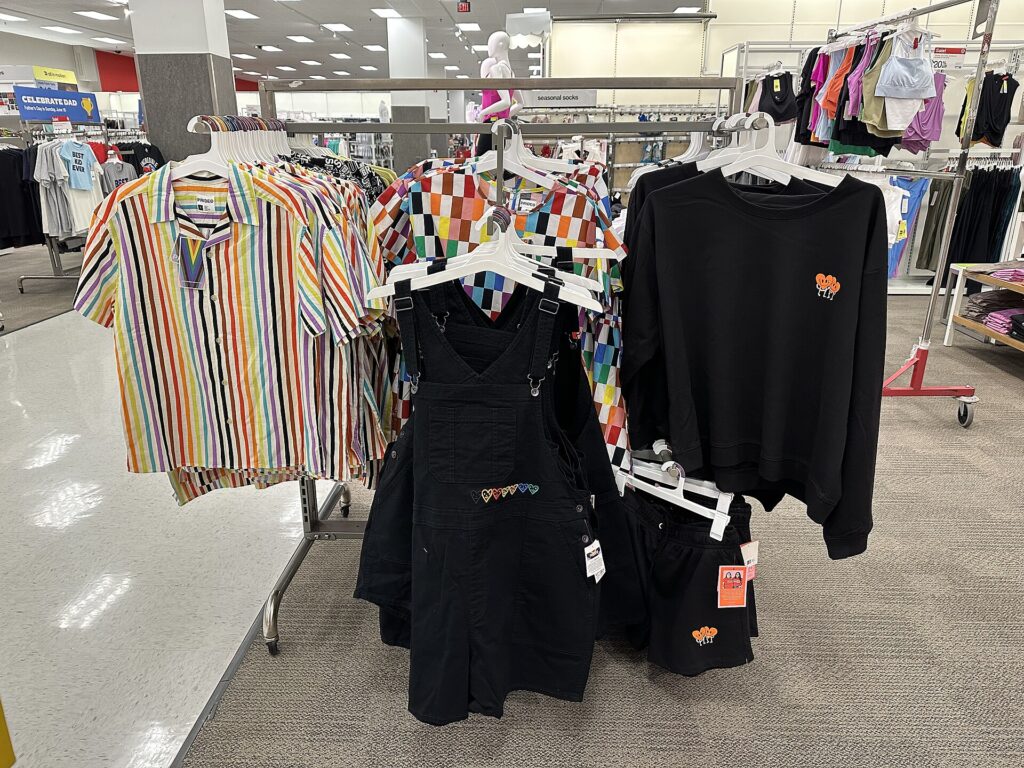
In May 2024, Target pulled its Pride merchandise back to online and select stores, ending the nationwide rollout of earlier years. Target said the move followed past sales results and customer demand. The story shows what happens when a symbolic campaign runs into local buying habits, and into the need to protect store employees.
How Target’s Assortment Changed
Target’s June 2022 corporate article described a Pride collection of more than 250 products available in every Target store and online. Clothing, accessories, home goods and other products were promoted as part of a national assortment.
After criticism of its 2023 collection, Target announced that it would adjust displays and remove some disputed items. Its May 2023 statement cited threats and confrontations affecting employee safety. Target did not say it would end the entire collection.
The more consequential distribution change came the next year. In its May 2024 fact sheet, the chain announced that the Pride assortment would be sold on Target.com and at select physical locations based on historical sales performance. That is a tangible narrowing of physical availability compared with its 2022 statement.
The exact number of participating stores is not supplied in that fact sheet. An assertion that a precise percentage of Target stores stopped carrying Pride goods would require further documentation.
For supporters of localized merchandising, the new approach looked like normal retail practice: individual stores stock products their nearby customers actually buy. For critics of the earlier nationwide campaign, it was a response to complaints. For Pride supporters, it felt like reduced visibility for a community the chain had publicly embraced.
Why Companies Care About Local Demand
Merchandising decisions typically depend on expected sell-through, shipping and shelf-space costs, seasonality and customer preferences. A seasonal product that sells in one market may move slowly in another. Unsold inventory must be marked down, returned or cleared.
When a political dispute adds the risk of protests or employee harassment, management faces another operational concern. Target explicitly described safety incidents in its 2023 statement, which should not be dismissed merely because opinions about the products differ.
However, financial data do not establish a nationwide dollar cost caused specifically by the Pride collection. Target’s August 2023 second-quarter comparable sales fell 5.4%, according to its earnings release, but executives also discussed weak discretionary demand and inventory challenges.
In 2024, Target’s companywide comparable sales rose slightly and store traffic improved, according to its March 2025 full-year results. Those figures prevent a simplistic claim that controversy produced uninterrupted multi-year traffic losses.
The general lesson is that consumer reaction can influence assortment, but the connection to consolidated profit cannot be measured without product-specific margins and sales data.
Sponsorships Are Different From Merchandise
Tractor Supply’s June 27, 2024, statement is frequently mentioned alongside Pride retail disputes. Yet the company’s announcement addressed corporate sponsorships, not a published nationwide inventory plan for Pride products.
Tractor Supply said it would stop supporting nonbusiness activities such as Pride festivals and voting campaigns, and redirect efforts toward agricultural education, animal welfare, veterans and rural communities. It also eliminated DEI positions and goals.
Those were corporate funding and employment-program decisions. It would be inaccurate to turn them into an unsupported claim that the chain pulled a specified number of Pride products from shelves.
Likewise, other retailers’ decisions about employee programs, branded communications and charitable donations should be evaluated independently of merchandising. A chain might carry rainbow-themed goods while declining to join an external workplace survey. Another might advertise during Pride Month but stock few seasonal products.
Read our full Target Woke Company Report.
The Competing Arguments
Critics argue that mass-market retailers should avoid making shoppers feel that an ordinary store visit requires participation in a political or cultural statement. They say businesses can treat every customer fairly without using highly visible promotional themes on disputed topics.
Supporters argue that seasonal Pride collections are commercial products purchased voluntarily, just like merchandise celebrating other events. They also point to the relevance of representation to employees and customers who value those products.
Both perspectives can recognize a basic distinction: a customer choosing not to purchase merchandise is exercising market choice; harassing staff or threatening a store is unacceptable. A retailer can respond to demand while safeguarding workers and maintaining civil discussion.
Retail managers should also distinguish disagreement with the merchandise from the possibility that certain items simply fail to sell profitably. There is no reason to assume every product removal is ideological. Companies routinely rotate seasonal assortments based on sales and inventory results.
What to Watch in Future Pride Seasons
The most reliable indicators are current company assortment announcements, store availability, online selections and official sponsorship disclosures. Old photographs can mislead because seasonal merchandise and displays change annually.
Shoppers evaluating a retailer should compare what the company actually promises with its actions. Does it distribute products nationally or selectively? Are collections limited to online channels? Does management explain the criteria? Are political donations or corporate sponsorships involved?
Those questions are easier to answer than speculation about the private views of every executive. They also provide a consistent way to compare companies without turning rumor into a list of alleged actions.
The major documented shift remains Target’s change from a national 2022 collection to selective physical-store availability in 2024. It demonstrates how a retailer can adapt distribution without necessarily ending a category altogether.
Watch the Shelves Next June
Pride merchandise and sponsorship choices differ by retailer, and broad claims often blur those differences. Check what a store sells, where it sells it and what it sponsors. Your purchases decide which assortments come back.
Want to see which companies have earned a D or F on our woke scorecard? See the Boycott List.
What do you think? Leave a comment below and share this article with friends.