
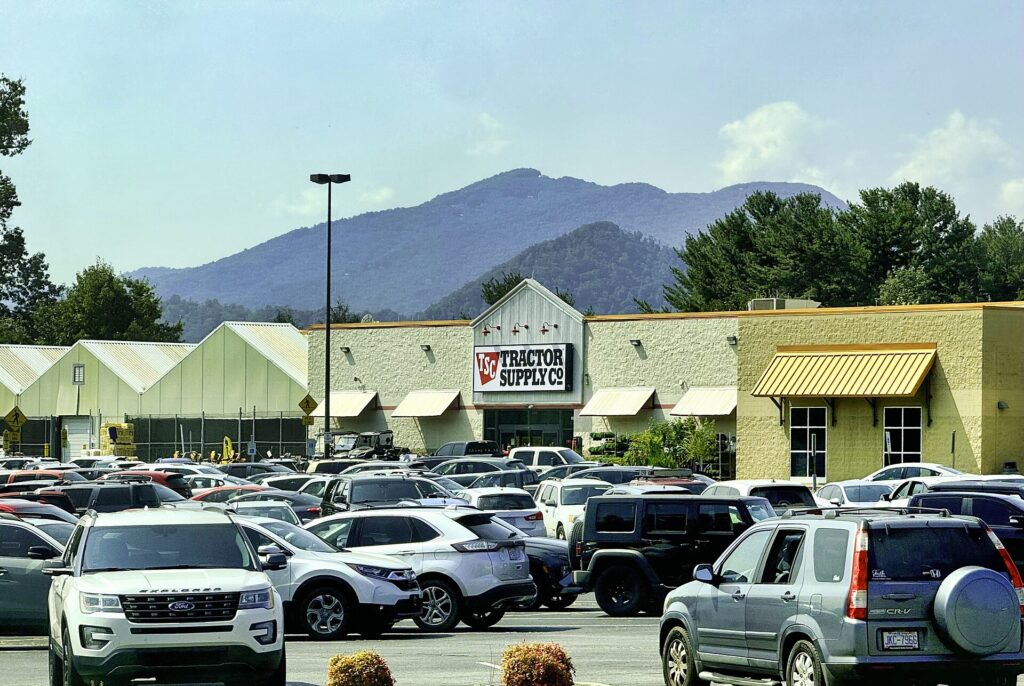
Photo: Harrison Keely / Wikimedia Commons (CC BY 4.0)
On June 27, 2024, Tractor Supply said it was eliminating its DEI positions and goals. It came after customer criticism amplified by conservative activist Robby Starbuck. Other big names made changes in 2024 and 2025. Not every retreat looked the same. Some companies ended formal goals, some quit outside rankings and some kept programs under new names.
How the Campaigns Worked
Starbuck used social media to publicize corporate statements, employee programs, sponsorships and diversity objectives that many traditional customers had never examined. His argument was that purchasers should know whether a company publicly supported policies they opposed.
The technique put pressure on companies whose customer bases included culturally conservative shoppers. A public campaign could prompt calls, emails and decisions to shop with competitors. A company’s subsequent announcement could then be compared with its earlier policies.
Attribution still requires care. A policy change following an activist campaign does not establish that the campaign was the sole cause. Corporate lawyers, litigation, changing federal priorities, board reviews and consumer demand can all influence decisions.
It is also misleading to treat all diversity initiatives as identical. Anti-discrimination compliance, employee mentoring, representation targets, political sponsorships and submissions to third-party rankings are different activities with different legal and commercial implications.
Tractor Supply Made the Clearest Public Reversal
In its June 27, 2024, statement, Tractor Supply said it had heard from customers that it had disappointed them and had taken that feedback to heart. The company committed to ending DEI roles and goals, stopping submissions to the Human Rights Campaign, and ceasing sponsorships unrelated to its business, specifically including Pride festivals and voting campaigns.
"We have heard from customers that we have disappointed them. We have taken this feedback to heart."
Tractor Supply Company statement, June 27, 2024 (Tractor Supply)
It said employee engagement groups would focus on mentorship, professional networking and business priorities. Separately, the company withdrew carbon-emissions goals while retaining attention to land and water conservation.
The specificity matters. These were not merely cosmetic changes to a department name; the company identified activities it would discontinue. At the same time, it stated that it would maintain a respectful workplace.
Tractor Supply’s announcement identified rural customers as central to its business. It cited work supporting agricultural education, veterans, animal welfare and local organizations. Readers evaluating the change can ask whether those commitments better match what the retailer sells and the communities it serves.
McDonald’s Chose a Different Approach
McDonald’s announced changes on January 6, 2025, in a company statement about its inclusion strategy. It said it would retire aspirational representation goals, change the name of its diversity team, and discontinue external surveys.
It did not renounce workplace inclusion altogether. McDonald’s emphasized that it continued to value a workforce reflecting the communities it serves and said it had reached an aspirational U.S. supplier-diversity spending goal ahead of schedule.
Its January 2025 update identified the changing legal environment as important context. The Supreme Court’s 2023 ruling on race-conscious college admissions directly governed higher education, not every private employer program; nevertheless, businesses reviewed policies in its aftermath.
The distinction between retiring numerical targets and discontinuing ordinary nondiscrimination practices matters. Customers who want hiring and promotions based on individual merit can compare published procedures, not merely announcements that a corporation is ending DEI.
The causal connection to one activist’s campaign is less direct for McDonald’s than Tractor Supply. It is more accurate to describe the restaurant chain as part of a broader corporate reassessment of employee and supplier goals.
Walmart and Lowe’s: What Is Publicly Established?
Walmart and Lowe’s were widely discussed during this period. Reuters and other outlets reported that the retailers reviewed supplier initiatives, employee groups, outside surveys or public commitments after activist pressure.
Read our full Walmart Woke Company Report.
But an externally reported internal memo should not be confused with a comprehensive accessible company policy. Independently verifying every internal provision requires the underlying document or an official statement. Publicly available sustainability and responsibility reports sometimes describe practices that remain even after an outside rating survey ends.
Lowe’s corporate responsibility materials continued to describe employee engagement and inclusion activities, although its program structure evolved. That can coexist with leaving a rating survey or consolidating affinity groups; the underlying work might continue in modified form.
The strongest method is to identify each company action separately. Ending sponsorship of a festival is not the same as banning workplace training. Discontinuing a rating questionnaire is not the same as changing employee benefits. Eliminating management targets does not prove that recruitment practices changed overnight.
This distinction is important for customers tracking corporate policy. A company can make a highly publicized announcement while preserving many earlier practices, or quietly make substantial changes without issuing a political statement.
What Starbuck’s Campaigns Did and Didn’t Prove
There is no authoritative consolidated tally showing how much Starbuck’s campaigns cost affected companies, or how much their policy changes saved. Businesses operate in different industries and confront different demand conditions.
Tractor Supply sells farm supplies, animal food and rural lifestyle products. McDonald’s depends on restaurant traffic, franchise operations and menu prices. Walmart’s results are heavily influenced by groceries. Their financial figures cannot be treated as a uniform measure of DEI controversy.
An activist can reasonably cite a changed written policy as evidence of influence. It is a different and much harder claim to say a particular post caused an identifiable profit increase or decline. Unless a filing allocates that impact, the amount remains unknown.
The absence of an exact backlash number does not make the policy changes unimportant. It means the best evidence is before-and-after documentation: which goals ended, which surveys stopped, which sponsorships ceased and which practices remained.
Supporters of inclusion programs argue that companies benefit from welcoming and developing employees with varied backgrounds. Critics say employment and supplier decisions should not involve race- or sex-based preferences. Both concerns require examining actual selection criteria, not only marketing language.
Read the Policy, Not the Press Release
The retreat from DEI was real, but it was uneven. Read the official statements, then look for follow-through, because an announcement doesn’t end every practice. Where you shop is still the final vote.
Walmart’s details are in our Walmart Woke Company Report linked above. Every company graded D or F sits on the Boycott List. Which policy change should we read next? Leave it below.