Kohl’s, once a staple of American retail, spent years marketing progressive causes directly to its shoppers. This article looks at the customer side of that story: what Kohl’s put on its shelves, the goals it set for which customers it wanted, and what has happened to its sales since. For the employee training email and the company’s “Inclusion & Belonging” rebrand, see Kohl’s Under Fire. For every sourced finding behind Kohl’s D (81/100) grade, see the Kohl’s Woke Company Report.
What Shoppers Saw on the Shelves
Pride merchandise has been a recurring part of the Kohl’s sales floor. Forbes reported in 2023 that Kohl’s 2022 ESG report “shows a clear focus on supporting the LGBTQ+ community,” and that its 2023 Pride display included baby onesies and Disney-themed Pride items (Forbes). The infant Pride bodysuit drew boycott calls, the New York Post reported.
Kohl’s did not back away. In June 2024, it announced “our latest Pride capsule collection” and said it had donated $100,000 to The Trevor Project, which runs crisis counseling services for LGBTQIA+ youth. When we checked kohls.com on Oct. 20, 2026, its Pride category was still listing Pride apparel and home goods.
In September 2020, Kohl’s sold a line of T-shirts made with a Milwaukee-area Black-owned business that promoted racial equality. PolitiFact reported that Kohl’s said the collection was not officially affiliated with Black Lives Matter, though slogans such as “enough is enough” and the raised fist echoed that movement (PolitiFact). Shoppers who saw it as a political statement were not imagining the resemblance.
Goals Aimed at Customers
Kohl’s went further than merchandise and set goals about who its customers should be. Its 2022 ESG report set a goal to “Increase our BIPOC customer count by 5%” by 2025, along with goals to “Triple our spend with diverse suppliers” and to increase BIPOC and female representation in director-and-above roles (Kohl’s 2022 ESG Report). Its 2023 Kohl’s Cares report said it would “continue to feature diverse-owned and -founded brands” in its in-store marketing (Kohl’s Cares 2023 Report). The 2026 proxy statement still says Kohl’s wants to “help more customers see themselves reflected in our brands” (Kohl’s 2026 proxy).
What the Sales Show
Kohl’s own annual reports show net sales, the money shoppers spend on its merchandise, falling in each of the last four years:
| Fiscal year | Net sales ($ millions) | Source |
|---|---|---|
| 2019 | $18,885 | Kohl’s 10-K, FY2021 |
| 2020 | $15,031 | Kohl’s 10-K, FY2021 |
| 2021 | $18,471 | Kohl’s 10-K, FY2021 |
| 2022 | $17,161 | Kohl’s 10-K, FY2024 |
| 2023 | $16,586 | Kohl’s 10-K, FY2025 |
| 2024 | $15,385 | Kohl’s 10-K, FY2025 |
| 2025 | $14,775 | Kohl’s 10-K, FY2025 |
From fiscal 2021 to fiscal 2025, net sales fell about 20%, from $18.5 billion to $14.8 billion. In its latest report, Kohl’s said net sales fell 4.0% in fiscal 2025, with comparable sales down 3.1%. It operated 1,153 stores in 49 states at the end of January 2026, after closing 27 underperforming stores announced in late 2024 (Kohl’s 10-K). In November 2025 it named Michael Bender its permanent CEO, its third chief executive in about three years, CNBC reported, noting that “the chain’s sales have been declining” (CNBC).
Kohl’s has not said its social stances cost it customers, and many pressures affect a department store’s sales. We are not claiming one cause. What the record does show is a retailer that spent years courting some shoppers with Pride lines and identity-based customer goals while its overall sales kept shrinking.
What Shoppers Can Do
Shoppers who disagree with these choices do not have to wait for Kohl’s to change. Kohl’s is on our boycott list, and our Better Alternatives page lists brands graded A, B or C under our methodology. Subscribe to our newsletter for updates on Kohl’s and related stories.
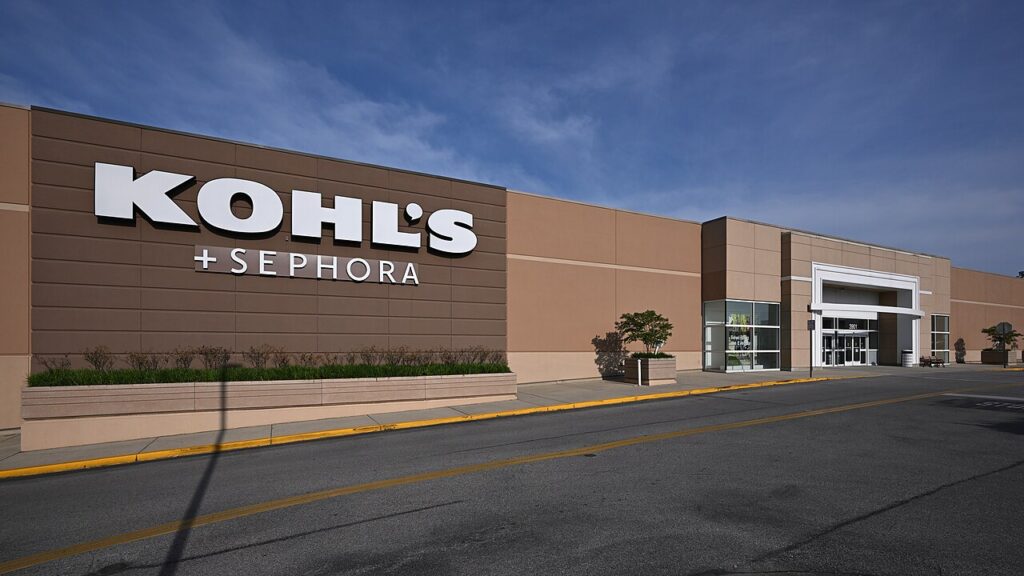
Photo: Kohl’s, Northgate, Aspen Hill, Maryland. G. Edward Johnson, CC BY 4.0, via Wikimedia Commons.